| HOME |
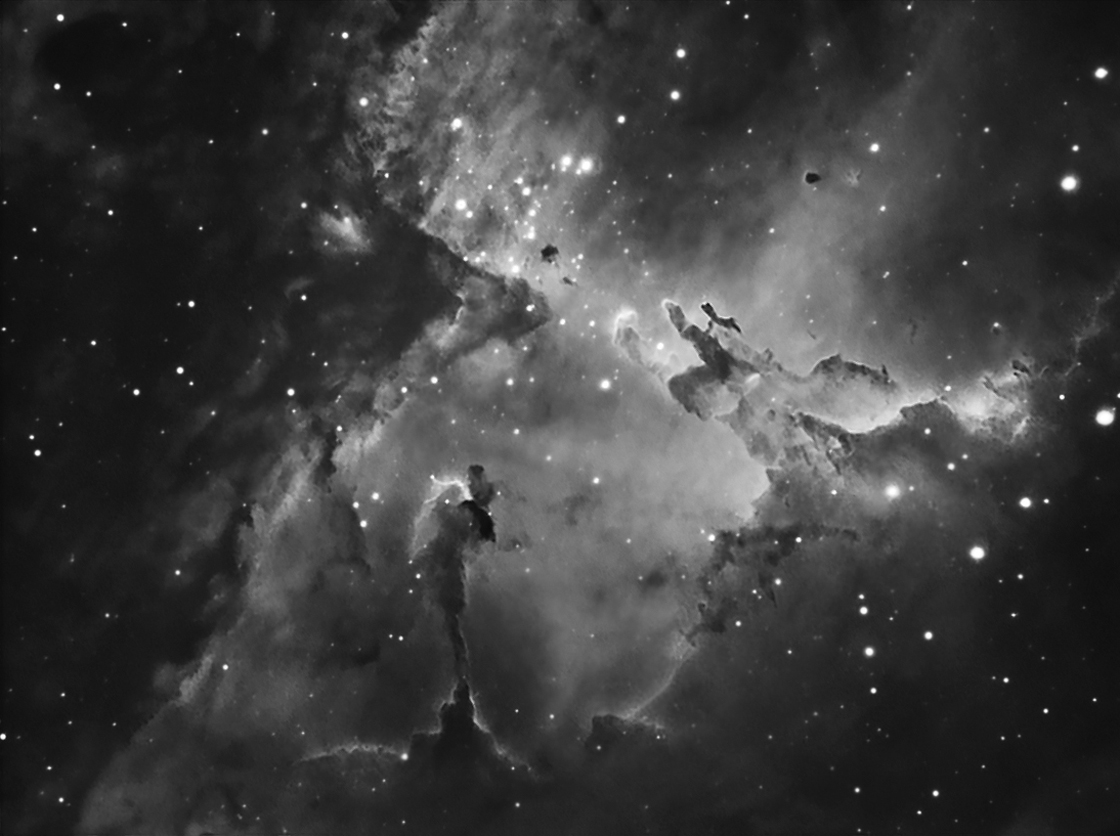
M 16 - THE EAGLE NEBULA (PARTIAL VIEW)
Serpens
(ra: 18,18.8 / dec -13:47)
DATA
TYPE: Cluster Associated with Nebulosity
APARENT MAGNITUDE: 6 (NGC 6611)
SIZE: 35 arcs minutes
DISTANCE: 7000 light years
OBJECT DESCRIPTION
Fall and winter give us very intresting objects in the Southern Hemisphere. We have Sagittarius and Serpens right in the overhead once the night is at its high entrance. In this case while testing the Vixen GPDX over the zenit we spot this magnificent object and decided to take some shots.
The open cluster in M16 was formed after the massive gas and dust cloud IC 4703 that shines because the radioactive energy of its young and hot stars. IC 4703 is now at a star forming process. The event is being produced near the “elephant trunks” which are visible in the photograph.
The Eagle Nebula is located close to the borders constellations of Scutum and Sagittarius. The cluster was discovered in 1745 -6 by De Cheseaux, however Charles Messier on his independent rediscovery in 1764 mentioned that the stars appeared merged with a faint glow. The nebula was probably photographed by E.Barnard in 1895 or by amateur astronomer Issac Roberts in 1897.
IMAGE INFORMATION
SCOPE: Celestron SCT C8 at (roughly) f6.7
MOUNT Vixen GPDX mount with Sky Sensor 2000
SKY CONDITIONS: visual limit magnitude 4. Windy session (same as M20 LRGB)
CAMERA: Starlight SXVF H9
FILTERS: Astronomik, Ha 6nm
EXPOSURES: Ha (54) 240 seconds subs
GUIDING: Synta 70/400 Refractor. SXV Guide Head
IMAGE ACQUISITION: Astro Art and CCD Control Interface 3.72
CALIBRATED: ImagesPlus (no darks removed) Richardson Lucy Deconvolution PROCESSING: Photoshop CS