| HOME |
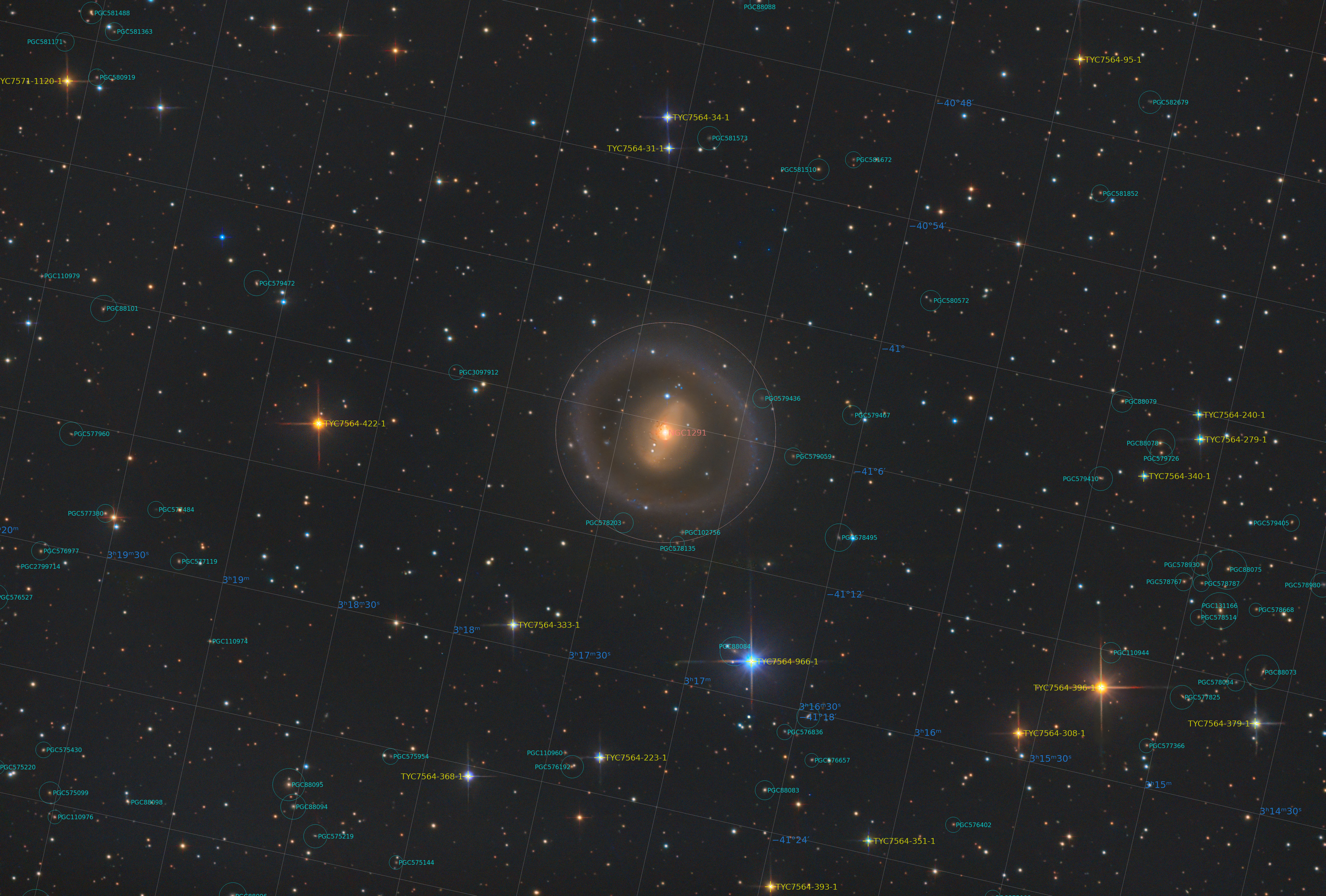
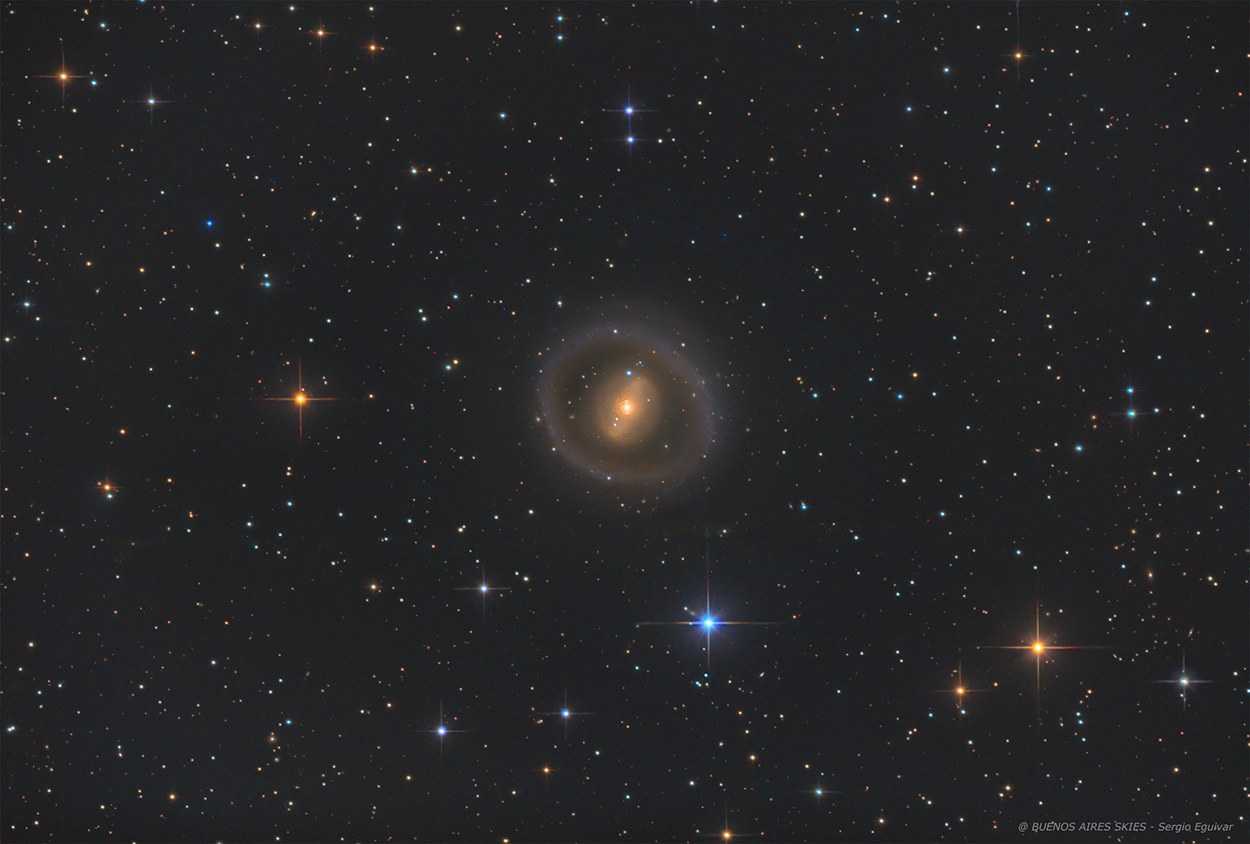
NGC 1269 - AKA NGC 1291
RING GALAXY IN ERIDANUS (THE RIVER NILE)
(Image centered at: ra 03h:15 m / dec - 41º 17')
CLICK THE IMAGE FOR A HIGH RESOLUTION VIEW
ANNOTATED IMAGE 100% RESOLUTION
December 2025, Observatorio Cielos Albertnos, Buenos Aires, Argentina
DATA
TYPE: Galaxy
APPARENT DIAMETER: 11 x 9.5 arc minutes
APPARENT MAGNITUDE (V): 9.4
DISTANCE: 33 Million light years
IMAGE INFORMATION
INSTRUMENT: Orion Optics UK 6" Newtonian with Ultra Grade Optics working at f 4.5
CAMERA: QHY 183 Mono Camera
MOUNT: VIXEN GPDX Guided off axis with QHY 5ii Mono Camera
FILTERS: OPTOLONG LRGB Set
SKY CONDITIONS: Bortle 3 skies. Seeing bad.
OBJECT DESCRIPTION AND IMAGE SESSION
NGC 1269, also known as NGC 1291, is a ring galaxy with an unusual inner bar and outer ring structure located about 33 million light-years away in the constellation Eridanus. It was discovered by James Dunlop in 1826 and subsequently entered into the New General Catalogue as NGC 1291 by Johan Ludvig Emil Dreyer. John Herschel then observed the same object in 1836 and entered it into the catalog as NGC 1269 without realizing that it was a duplicate.This galaxy was cited as an example of a "transitional galaxy" by NASA's Galaxy Evolution Explorer team in 2007.
NGC 1269 faces towards the Solar System nearly face-on. It has a prominent bulge, and is forming stars in its disk, albeit slowly, being a lenticular galaxy. Like other early-type galaxies, NGC 1269 has a population of old globular clusters. About 65% of them belong to the "blue" population that is more metal-poor, while the rest are "red" and more metal-rich. Two thin spiral arms making up the outer ring area have a blueish colouring that suggests they are relatively young and most likely have star formation occurring. As we move toward the centre, we transition towards a yellowish hue. This area comprises much older stars; most likely, star formation has stopped.
NGC 1269 - AKA NGC 1291
RING GALAXY IN ERIDANUS (THE RIVER NILE)
IMAGE LABELLED AT 100% RESOLUTION